

What should you investigate before buying a home in North Park or South Park, San Diego?
Before you close escrow on a home in North Park or South Park, you need to evaluate the property's foundation, plumbing, electrical systems, permit history, parking situation, historic status, and outdoor space, not just its curb appeal.
Why This Matters in North Park and South Park Right Now
You already know why you want to live in one of these two hip neighborhoods. Maybe it's North Park's walkability, the restaurants along 30th Street, and its proximity to Balboa Park that we talked about in this video-blog. Or maybe you love South Park's sense of community, slower pace, and plethora of historic homes.
But falling in love with a neighborhood and falling in love with the right house are two different things. A large share of the housing stock in North Park and South Park predates modern building codes. A City of San Diego reconnaissance survey documented roughly 6,000 structures built before 1945 across the greater North Park, South Park, University Heights, and City Heights areas. That is not a small number, and it means the home you are touring may be beautiful on the surface while quietly carrying deferred maintenance issues that could cost tens of thousands of dollars to resolve.
With almost 20 years of experience and more than 565 closed transactions across San Diego, I have sold numerous homes in these areas, and the most common condition issues I see are foundation problems, sewer or plumbing failures, and outdated electrical systems. I have had several sales reveal combinations of all three in a single property. This article walks you through exactly what to check before you make your North Park or South Park purchase.
Inspecting the Bones: Foundation, Plumbing & Sewer, and Electrical in North Park and South Park Homes
Foundation Concerns You Should Not Ignore
When I tour older homes in North Park and South Park, I am always looking at the floors before I look at the kitchen. Uneven floors, stair-step cracking in walls, exterior stucco or masonry, and doors that do not close properly can all indicate foundation movement. Many homes here sit on original raised foundations or post-and-pier systems that have settled over decades.
What I tell my clients is this: a general home inspection is a starting point during the due diligence period, not a finish line. If the inspector flags any signs of movement or settling, you should bring in a licensed structural engineer or foundation contractor for a separate evaluation before you remove your contingencies and finalize your purchase. The cost of a foundation assessment is modest compared to the cost of a surprise after closing.
Sewer Lines and Plumbing: The Hidden Problem
Sewer lateral lines in these neighborhoods are often original clay pipe or cast iron. Tree roots infiltrate clay pipes over time, and a line that works fine most days can back up catastrophically during heavy use or during rain. I always recommend a sewer scope during the inspection period, which is a camera inspection of the lateral line from the house to the city main. This is a separate service from a general inspection and typically costs a few hundred dollars, but it is so worth it. In my experience, it is the single most valuable add-on inspection you can order in North Park or South Park.
Beyond the sewer lateral, check the supply plumbing inside the house. Galvanized steel pipes, common in pre-1945 construction, corrode from the inside out, reducing water pressure and eventually failing. Ask your inspector to identify the pipe material and note any sections that have already been replaced with copper or PEX.
Electrical Systems: What to Watch For
While most homes in North Park and South Park have had the electrical systems upgraded, some homes in these neighborhoods still have original knob-and-tube wiring and/or undersized electrical panels. A 60-amp panel was adequate in 1935. It is not adequate for a modern household running air conditioning, a home office, and an EV charger. Your inspector should note the panel amperage, the wiring type, and whether any DIY electrical work has been done without permits. Unpermitted electrical modifications are a safety and insurance concern, and I see them regularly.
Checking Permits and Square Footage Before You Buy a North Park Home
One of the most frequent issues I encounter in North Park and South Park is a discrepancy between the square footage a listing advertises and the square footage the City of San Diego has on record. A converted garage, an enclosed porch, or an added bedroom may look finished and functional, but if no building permit was ever pulled, that space does not legally exist as living area. This is super common in San Diego and it doesn't meant the seller can't sell the home. Homes with unpermitted space changes hands all the time here, but it must be disclosed by the seller, and the buyer needs to be aware and okay with the situation.
Before you remove your inspection contingency, if you have questions, you can pull the permit history through the City's online permitting portal. Compare what was permitted against what you see on the ground. If there is a gap, you may have a negotiation point.
Here is something many buyers do not realize: under AB 2533, the City of San Diego cannot deny a permit to legalize an unpermitted ADU or JADU that was built before January 1, 2020 solely for violations of building standards or ADU development regulations, unless the correction is necessary to address conditions that would otherwise make the structure substandard or uninhabitable. That means some legacy unpermitted units can potentially be brought into compliance as long as they don't have major health and safety violations that affect habitability. But you need to confirm the construction date and eligibility before you assume the space can be permitted.
So what does this mean for your search? It means you should never take advertised square footage at face value, especially in neighborhoods where garage conversions and informal additions have been part of the culture for decades.
Evaluating ADU Potential on a North Park or South Park Lot
Another thing buyers frequently ask me about is whether a property has room for an ADU. In these neighborhoods, the appeal is obvious: an accessory dwelling unit can provide rental income, house a family member, or simply add long-term value.
Under the City of San Diego Municipal Code Section 141.0302, as of January 2026, a single-family lot can accommodate one JADU (Junior Accessory Dwelling Unit), one converted ADU (such as a garage conversion), and one detached ADU, all by right. The maximum ADU size on a single-family lot is 1,200 square feet.
But here is where buyers get ahead of themselves. Before you assume that backyard or garage is your future rental unit, you need to verify lot coverage limits, setback requirements, and whether the property sits within a historic district. ADUs must comply with California Building Standards Code requirements for fire separation distance, opening protection, allowable height, and allowable area, and these requirements can increase the setback from what you might expect.
Also keep in mind that ADUs in San Diego must be rented for a minimum of 31 consecutive days, per SDMC Chapter 14; JADUs are not subject to this minimum rental term. A real estate attorney or the City can confirm whether other short-term rental rules apply to your specific unit type.
If ADU income is part of your purchase math, I recommend having a preliminary site plan sketched during escrow, not after closing, so you know exactly what is feasible before you commit.
Historic Designation: What It Means for Your North Park or South Park Renovation Plans
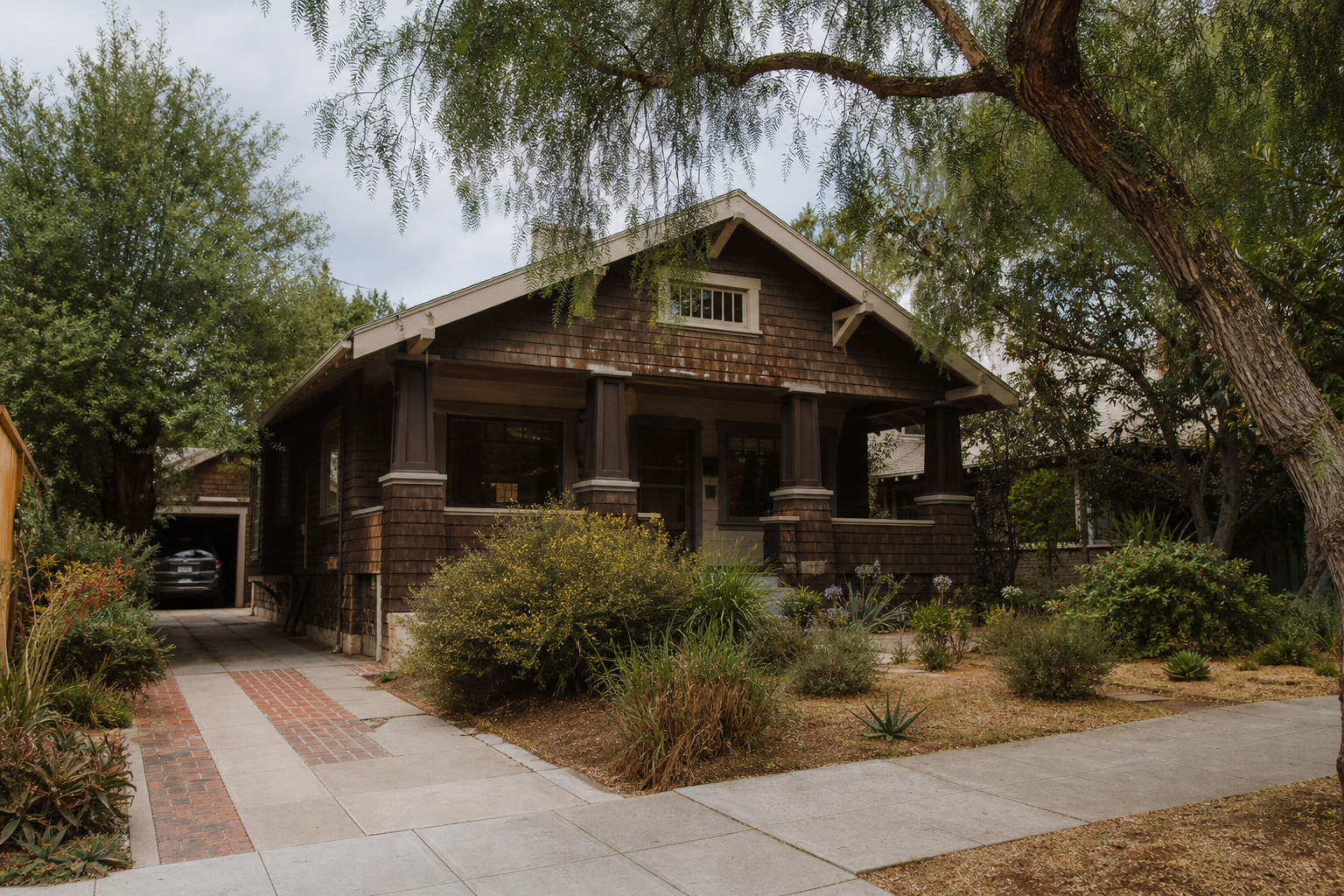
You might tour a charming Craftsman bungalow along one of North Park's residential streets near Upas Street and immediately start imagining your renovation. New windows, a modern roof, maybe a second story. But before you plan a single change, you need to know whether that home carries historic designation.
Understanding the Layers of Historic Protection
As of a May 2016 City survey, North Park contained 105 individually designated historical resources and four designated historic districts: Burlingame, Shirley Ann Place, North Park Dryden, and the University Heights Water Tower and Pumping Station. Five additional potential historic districts were also identified, including the 30th Street and University Avenue Commercial area. Those numbers may be higher today.
South Park has its own pending historic district nomination that was being worked on by City staff alongside the Mission Hills Historic District Phase II and Inspiration Heights nominations.
National Register-listed resources in North Park include the Georgia Street Bridge and the Lafayette Hotel, also known as Imig Manor.
What Designation Means for Your Remodel
If your property is individually designated or a contributing resource within a historic district, renovations that alter the exterior may require review by the City's Historical Resources Board. That can affect everything from window replacement materials to roof styles to additions.
There is a significant upside, though. The California State Historic Building Code provides flexibility in meeting certain code requirements for designated buildings. And the Mills Act offers property tax relief to owners who rehabilitate and maintain designated historical resources. For many homeowners, the property tax relief from a Mills Act contract can help offset the costs of maintaining a historic property.
What I recommend: search the City's Historical Resources Board database before making an offer. Know exactly what status the property carries, whether individually designated, contributing to a district, or located in a potential district, so you can plan accordingly.
Parking Realities: What to Actually Expect Block by Block in North Park
This is the one that surprises buyers most often. You see a detached garage in the listing photos and assume your car is covered. Then you visit the property and discover the garage is accessed by a narrow alley that your SUV cannot navigate without folding in both mirrors, or that the garage itself is too shallow for a modern vehicle.
Many North Park and South Park lots were developed with single-car garages designed for 1930s automobiles. I always recommend physically walking the alley and measuring the garage opening during your tour. It's also not uncommon for these garages to be completely termite-infested and/or in very poor condition.
There is another trade-off to consider: if you convert the garage to an ADU, you lose your covered parking. Under current San Diego regulations, no replacement off-street parking space is required for an ADU in most circumstances. That means the conversion is legally straightforward, but you will be relying entirely on street parking and your driveway, if you have one.
Street parking availability varies dramatically from block to block and hour to hour. A spot near a quiet residential pocket three blocks from 30th Street looks very different from one adjacent to a busy restaurant corridor on a Saturday night. I tell my clients to visit the property on a weekday evening and again on a weekend to observe real parking conditions. Do not rely on a midday Tuesday showing to judge what parking looks like when everyone is home. And let me just say that there is a reason North Park is often called No Park. You will drive down its streets and see what appears to be endless lines of cars. It's no joke.
The Specific Block Matters More Than the Neighborhood Name
North Park and South Park each contain a wide range of micro-environments. A home one block from University Avenue or the busy stretch of 30th Street will experience meaningfully different noise, foot traffic, and late-night activity than one tucked into a residential pocket a few blocks away. It is always a good idea to walk around the neighborhood at different times of day/night and different times during the week/weekend.
Beyond nightlife, look at traffic patterns. Some residential streets in North Park serve as cut-throughs for commuters avoiding the main corridors. That is something you will only notice by driving the route during morning and evening rush. And pay attention to what businesses are directly adjacent. A coffee shop is charming. A business with a loading dock or late-night dumpster pickup is a different experience entirely.
Outdoor Space in North Park and South Park: What Is Actually Usable
Lot sizes in these neighborhoods are often modest, and what looks like a generous yard in listing photos can be deceiving. Part of that space may be consumed by setback requirements, utility easements, or existing accessory structures like sheds or detached garages.
If you want both usable outdoor space and ADU potential, those goals can compete with each other on a smaller lot. ADU setback and fire separation requirements may reduce the remaining yard to something quite compact. I recommend having a preliminary site plan done during the inspection period so you understand the trade-offs before you close, not after you have already started dreaming about a garden and a rental unit in the same backyard.
Also assess privacy. Older neighborhoods with smaller lots often mean closer neighbors. Stand in the backyard during your tour. Can you see directly into the neighbor's kitchen? Can they see into yours? A fence helps, but a second-story addition next door changes the equation entirely.
Frequently Asked Questions About Buying in North Park and South Park
What are the most common problems found during inspections in North Park?
Foundation issues, sewer line failures, and outdated electrical systems are the most frequent problems. Many homes predate modern codes, and original clay or cast iron sewer pipes, knob-and-tube wiring, and settled foundations are regularly discovered during inspections. I recommend a general inspection, a separate sewer scope, and a foundation evaluation if any movement is noted.
Should I get a sewer scope before buying a home in South Park?
Yes - always. A sewer scope is a camera inspection of the lateral line from the home to the city main. Original clay or cast iron pipes in these neighborhoods are prone to root intrusion and deterioration. The inspection typically costs a few hundred dollars and can reveal problems that would cost thousands to repair after closing.
How do I check if a room addition in North Park was permitted?
You can pull the property's permit history through the City of San Diego's online permitting portal. Compare the permitted square footage and structures against what you observe during your tour. Any discrepancy may indicate unpermitted work, which affects the property's legal square footage, insurance, and possibly resale value. Homes can change hands with unpermitted space, but you want to be aware of it before removing your contingencies and closing.
Can I build an ADU on a single-family lot in North Park?
As of January 2026, per the City of San Diego Municipal Code Section 141.0302, a single-family lot can support one JADU, one converted ADU, or one detached ADU by right. A detached ADU of 800 square feet or less cannot be denied based on zoning constraints alone. However, setback requirements, lot coverage, and historic district status can all affect feasibility.
What is the maximum ADU size allowed in San Diego?
On a single-family lot, the maximum gross floor area for an ADU is 1,200 square feet, per the City of San Diego Municipal Code as of January 2026. A detached ADU of 800 square feet or less cannot be denied based on zoning constraints alone, though setback requirements, lot coverage, and historic district standards may still affect feasibility.
Does historic designation prevent me from remodeling a North Park home?
It does not prevent remodeling, but it can affect what changes require review, especially exterior alterations. The California State Historic Building Code provides flexibility for designated buildings, and the Mills Act offers property tax relief for owners who maintain historic properties. Check the City's Historical Resources Board database before closing escrow.
What historic districts exist in North Park?
As of a May 2016 City survey, North Park contained four designated historic districts: Burlingame, Shirley Ann Place, North Park Dryden, and the University Heights Water Tower and Pumping Station. Five additional potential districts were also identified. The current count may be higher.
How do I evaluate parking before buying in South Park?
Visit the property on a weekday evening and again on a weekend. Physically walk the alley if the garage is alley-accessed, and measure the garage opening to confirm a modern vehicle fits. If you are considering converting the garage to an ADU, understand that you will lose covered parking, and no replacement space is required under current rules.
Can I legalize an unpermitted garage conversion in North Park?
Under AB 2533, the City cannot deny a permit to legalize an unpermitted ADU or JADU built before January 1, 2020 solely for building-standard or ADU-regulation violations, unless the correction is necessary to address substandard conditions. You need to confirm the construction date and eligibility with the City before assuming the unit can be legalized.
How do I find out if a North Park home is in a potential historic district?
Search the City of San Diego's Historical Resources Board database. The 2016 North Park historic resources survey identified five potential historic districts, including the 28th Street Residential, Kalmia Place Residential, and 30th Street/University Avenue Commercial areas. South Park also has a pending historic district nomination. A property within a potential district may face future design review requirements.
The Bottom Line on Buying in North Park or South Park
The homes in North Park and South Park have real character, and that character comes with real responsibility. Before you fall in love with the Craftsman details or the walkability score, make sure you have investigated the foundation, scoped the sewer line, checked the electrical panel, pulled the permits, verified the parking situation, researched the historic status, and walked the block at different times of day.
With over 19 years in San Diego real estate, more than 565 closed transactions, and a team that has earned over 300 verified five-star reviews across platforms, I have walked through these exact scenarios with buyers many times. One of my clients put it well when describing our process for their North Park multi-unit sale and their South Park home of 20 years: "She kept us grounded and focused on our most important goals."
That is exactly what pre-closing due diligence is about. Staying focused on what matters before your emotions take over. If you are considering a purchase in North Park, South Park, or any of San Diego's established neighborhoods, I would welcome the chance to walk a property with you and point out what most buyers miss. Call me at 619-249-7016 or send a message from the contact page on this website.
Blog written by:
Kimberly Schmidt, REALTOR® DRE# 01781140 Kimberly Schmidt & Associates at Compass, 8889 Rio San Diego Dr #200, San Diego, CA 92108